By Steel City Appliance Repair
If your LG dryer is running but producing no heat, the heating element is almost always the cause. But here’s what most repair guides don’t tell you: there’s a specific reason LG dryer heating elements fail that, if you don’t understand it, means the problem will come back after you replace the part.
The Real Reason LG Dryer Heating Elements Fail
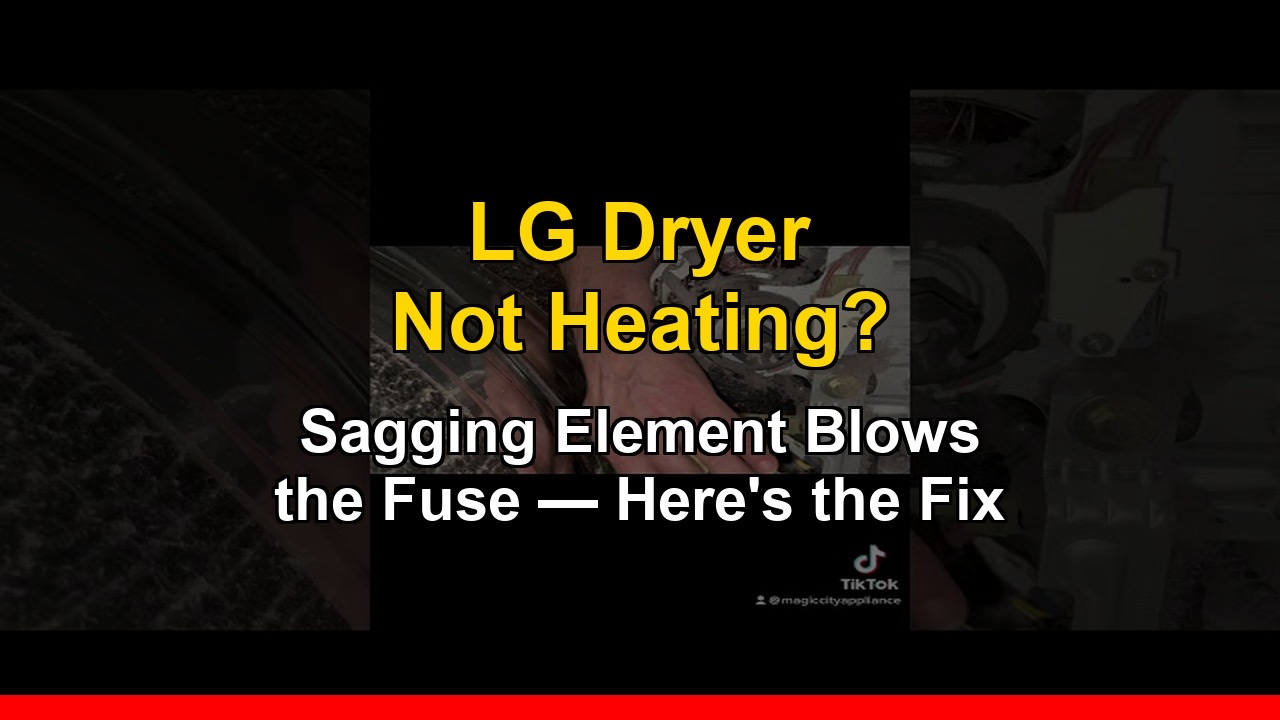
On LG dryers there’s a specific failure pattern: the element sags. Over time, the heating coil can droop and make contact with the metal dryer case. When this happens the element becomes grounded — it stays energized even when it should be off. The dryer runs hotter than it should, and eventually the high limit thermal fuse blows to protect the dryer.
Once the high limit fuse blows, the dryer loses heat entirely. This is why it’s important to replace both the heating element and check the thermal fuse at the same time.
Symptoms of a Failed LG Dryer Heating Element
- Dryer runs normally but clothes come out cold or damp
- Dryer takes multiple cycles to dry a normal load
- Dryer drum spins but no warm air is felt at the exhaust vent
- Dryer trips the thermal fuse repeatedly after replacement
What You’ll Need
- LG Dryer Heating Element 5301EL1001A — order on Amazon here (affiliate link)
- Multimeter (to test the element and fuse before replacing)
- Phillips head screwdriver and nut driver set
- 30–45 minutes
As an Amazon Associate I earn from qualifying purchases. This helps support the channel and keeps these tutorials free.
Step 1: Test the Heating Element
Unplug the dryer first. Safety is critical — dryers run on 240V. Disassemble the dryer to access the heating element housing. Set your multimeter to continuity. Touch the probes to both terminals on the heating element. A good element shows continuity; a failed element shows no continuity (OL or open circuit). If failed, also visually inspect for the sagging coil touching the housing.
Step 2: Check the High Limit Thermal Fuse
The thermal fuse is mounted on or near the heating element housing. Test it with your multimeter — it should show continuity. If not, it has blown and must be replaced along with the element. It’s typically a $5–$10 part.
Step 3: Install the New Heating Element
Install the new element (5301EL1001A) making sure the coil sits correctly and is not touching the housing walls. This is the critical step — a properly seated element won’t sag and ground out again. Reconnect all wires, reassemble the panels, and run a test cycle to confirm heat is restored.
Watch the Full Repair Video
👉 LG Dryer Not Heating — Full Heating Element Replacement
Cost Breakdown
| Item | Cost |
|---|---|
| LG Heating Element 5301EL1001A | ~$20–$35 |
| High limit thermal fuse (if needed) | ~$5–$10 |
| Professional repair call-out | $150–$250 |
| Your savings | $105–$225 |
FAQ
Do I need to replace the thermal fuse every time I replace the heating element? Not necessarily — test it first. But if the element failed due to the sagging/grounding issue, the fuse has almost certainly blown too.
My LG dryer has heat but takes forever to dry — is it the heating element? Not necessarily. Slow drying is more often caused by a clogged lint filter or blocked exhaust vent. Check those first.
Still Having Issues?
Drop your LG dryer model number in the comments below. Subscribe to Steel City Appliance Repair for weekly DIY appliance repair tutorials.